
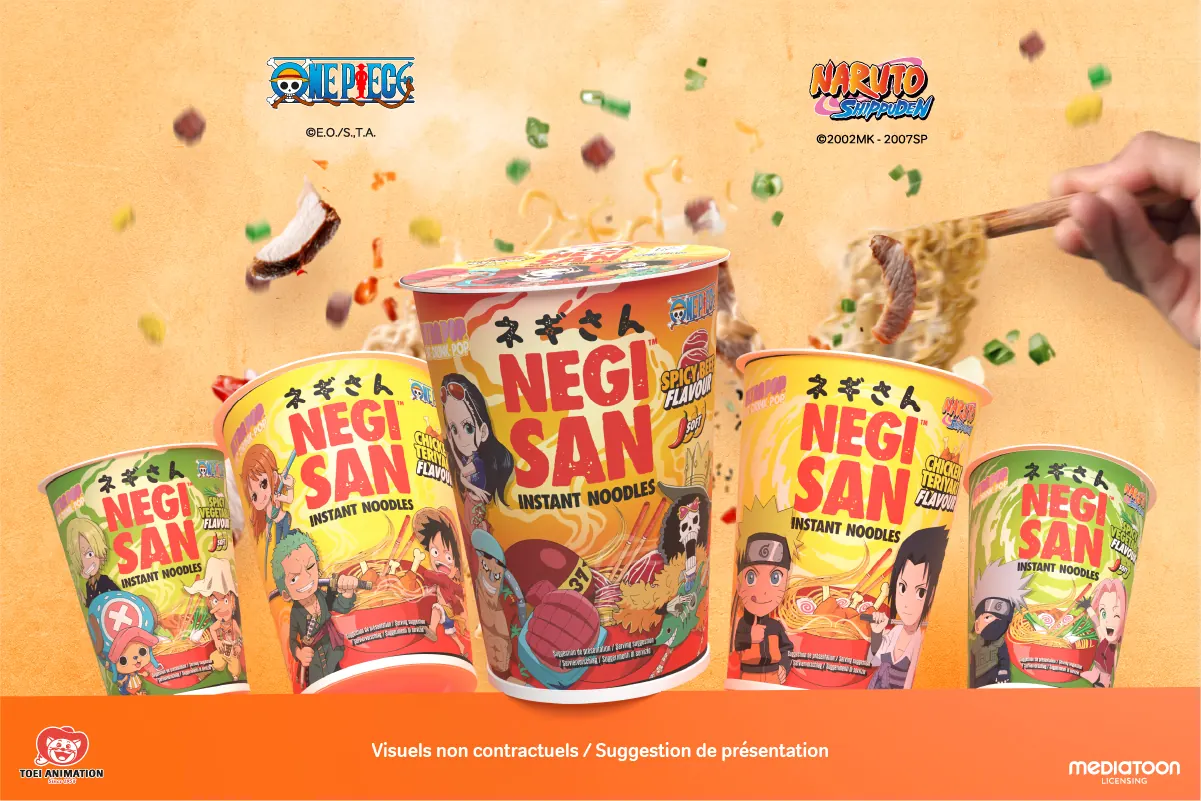
Licensed products already command strong attention. Precise merchandising converts recognition into understanding and then into purchase.
1. Create an immediate visual block
Group enough products together for the franchise to read clearly from a distance. Controlled repetition of colours and characters creates a stronger visual block than scattered products.
The block can be organised by licence, consumption occasion or launch. The key is to choose a logic shoppers can understand effortlessly.
2. Give every product a clear role
A familiar drink can provide the entry point, a snack can complete the basket and a new product can create urgency. Think of the shelf as a mini-story: attraction, discovery, choice.
3. Work the impulse zones
On-the-go formats and confectionery belong near checkouts, in an event corner or beside a complementary offer. Good placement connects the product with the right purchasing moment.
Effective merchandising does not try to show everything. It organises attention in this order.
4. Refresh the presentation
Pop-culture communities follow releases and news from their favourite franchises. Without relying on one calendar, rotate featured products, combinations and messaging to preserve a sense of discovery.
5. Make sharing easy
A photogenic display can extend the shelf’s reach onto social media. A simple background, clean lighting and an orderly selection are often enough. The product must remain the hero of the image.
Measure to improve
Test a limited number of changes: position, number of facings, product combinations or messaging. Observe rotation and associated baskets before scaling. Your supplier can help select the new products and formats best suited to these tests.
Start with the actual shopping journey
Before moving products, observe how customers use the store. Can they identify the category and price from the entrance? Are cans visible behind the items in front? Can shoppers reach snacks without moving a display? A clear section depends on more than reference count. Customers should recognise the universe, understand what they can eat or drink and find the information needed to choose.
Photograph the original display and record the observation period. This gives you a reference for subsequent tests. Set a specific objective: introduce a range, simplify choice or reduce stockouts on a reference. Avoid changing pricing, location and the entire assortment at once, because it becomes difficult to understand the cause of any sales change.
Keep each product category understandable
One licence can connect several food families, but each retains its own use. A drink must read as a drink and confectionery as confectionery. Combine character recognition with clear category, format and price information. ULTRAPOP drinks, snacks and confectionery ranges can share a corner while each family remains easy to identify.
| Category | Point to check | Useful observation |
|---|---|---|
| Drinks | Show the category, flavour and price without hiding the character. | Can shoppers distinguish the references easily? |
| Savoury snacks | Keep the display legible as stock levels fall. | Is the product still visible at the end of the day? |
| Confectionery | Avoid scattering many small formats. | Can shoppers understand the selection without handling everything? |
| Instant noodles | Keep product use and reference information clear. | Can shoppers identify the variants at first glance? |
Make replenishment part of the display plan
A display can look attractive on launch day and become confusing after a few sales. Plan how staff will replace products, recognise empty spaces and refresh the assortment. A simple plan shared with the store team helps prevent a product in the stockroom from staying absent from the shelf. Price and product information should remain visible throughout these changes.
Match the selection to the space actually available. Adding a licence does not mean adding every reference. A compact, clearly presented and monitored range may be easier to manage than a scattered assortment. Our guide to choosing a manga drinks wholesaler covers packaging, delivery and availability questions to ask before buying.
Measure tests with the right indicators
Compare periods of equal length and note unusual events such as promotions, holidays, late deliveries or stockouts. Track units sold and available stock, followed by revenue and margin where your data allows it. Increased revenue alone is not proof of profitability. Purchasing costs, discounts, transport and potential losses also need to be considered.
Start with one observable change, such as grouping a family or improving signage. Collect staff feedback too: recurring questions, misunderstood products and requests for characters you do not carry. These observations create a useful basis for your next conversation with a professional drinks and snacks wholesaler, without assuming identical growth in every store.
Build a corner for your own customers
Pop culture universes in snacking provide an entry point, but the final choice still depends on the product and purchase context. Build a clear selection for your existing customers instead of accumulating characters. With ULTRAPOP, the LNS Trade brand, you can explore several licensed categories and request a proposal suited to your channel, market and retail space.